1875–76
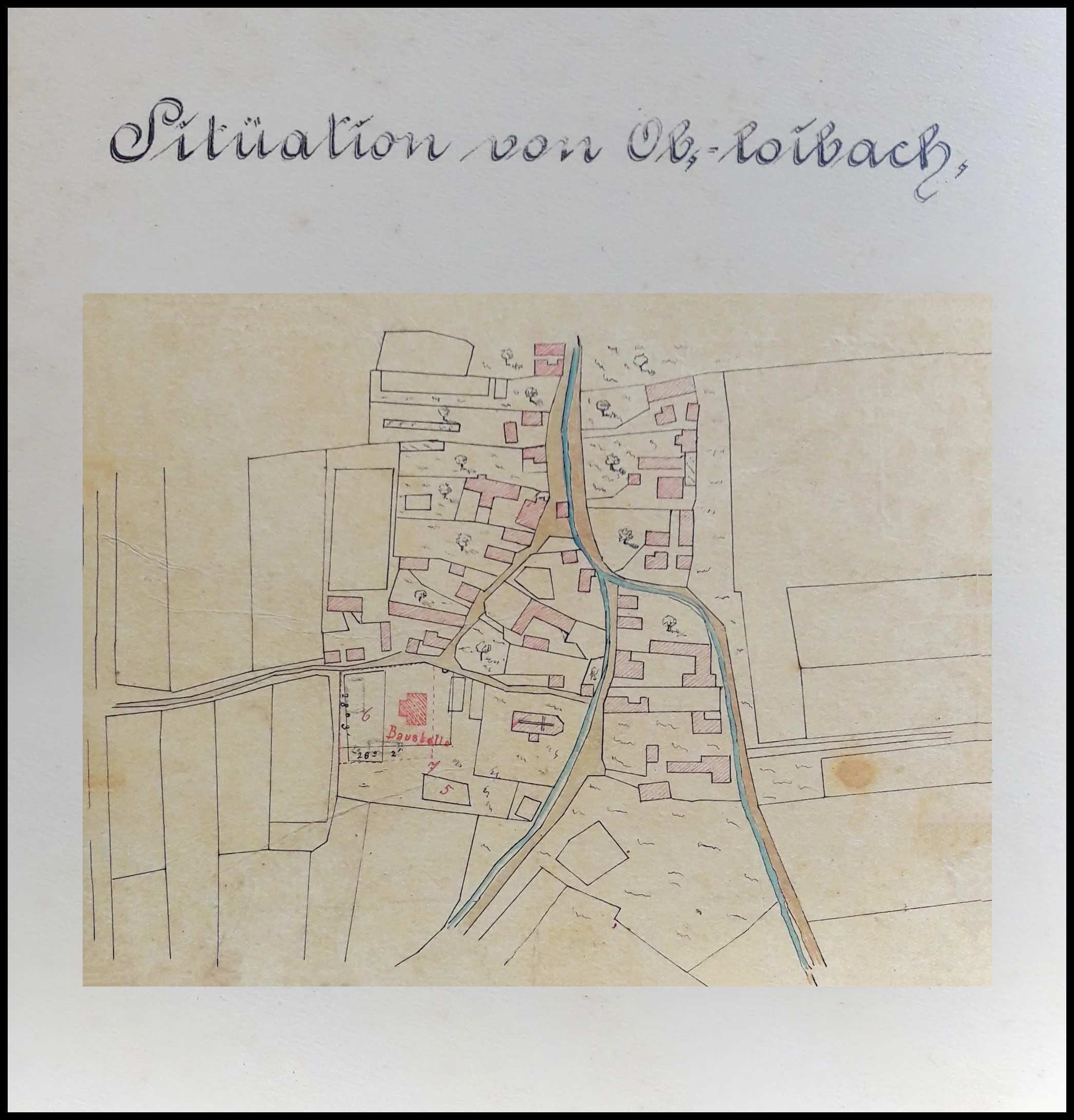
According to the school chronicle dated 31 December 1890, the village of Oberloibach had 154 inhabitants at the time. Unterloibach was then a separate village.
The “honourable Imperial-Royal District School Council” (k. k. Bezirksschulrath) instructed the municipality of Loibach to elect its own local school council (Ortsschulrath) with the aim of establishing a school in Loibach. The local dignitaries, however, were of the opinion that Loibach did not require a school of its own, since a large school already existed in Bleiburg and the connections to the town were considered adequate.
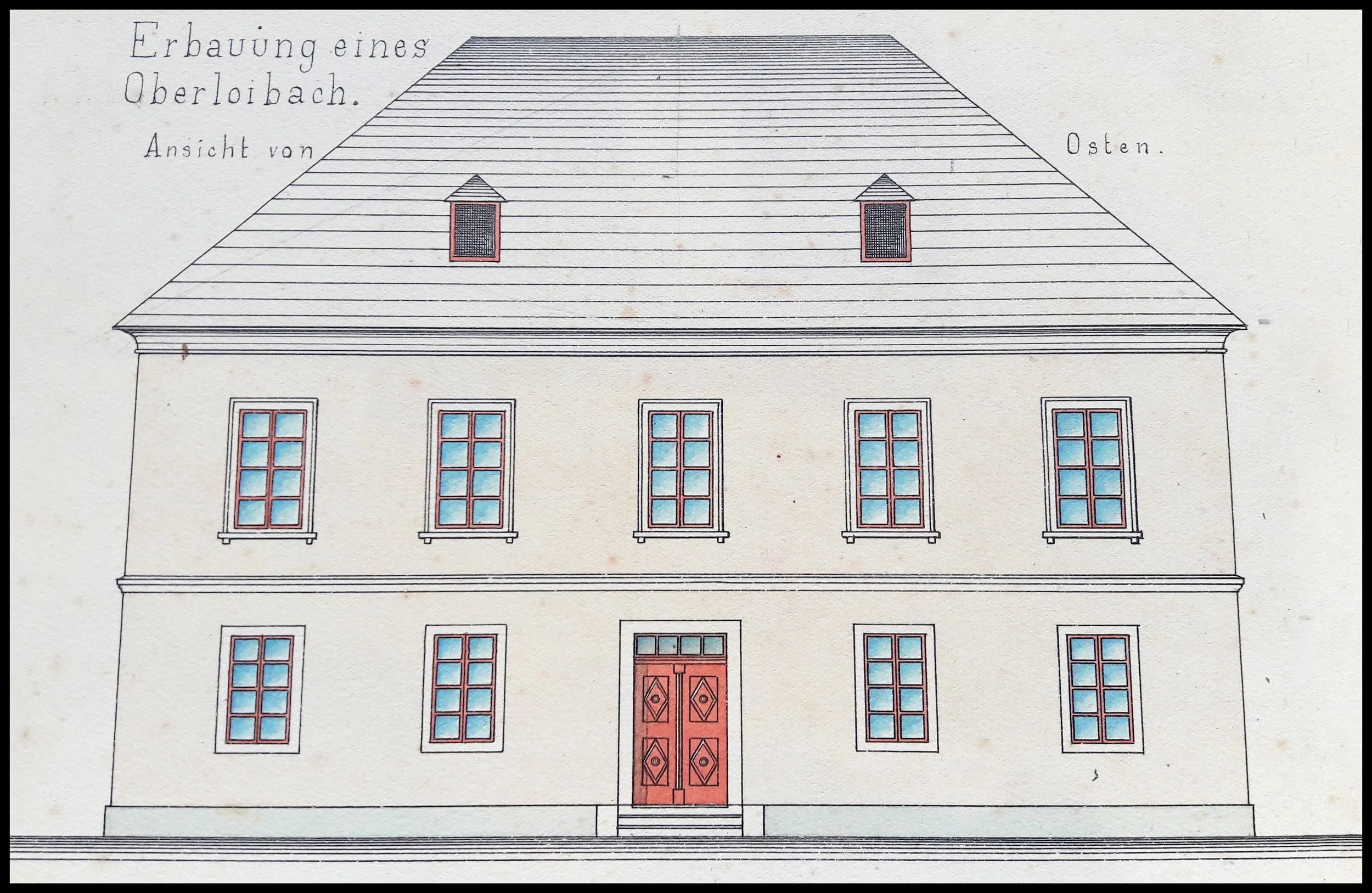
On 15 October 1875, the municipality of Loibach finally decided to establish its own school. Construction was completed on 20 July 1876, after a building period of less than ten months. The school building cost 8,395 guilders, which would correspond to approximately €200,000 in today’s money. To finance the project, a loan of 5,000 guilders was obtained from the Provincial Fund. In addition, the Imperial-Royal District School Council granted a state subsidy of 300 guilders. Franz Jurkovič from St. Georgen bei Stainz in Styria was appointed the school’s first teacher and provisional headmaster.
1877–1900
During its first years, the school was attended by up to 80 pupils. In 1892, the single-class school was organised into three divisions. At that time, the records list 58 boys and 59 girls of compulsory school age.
The school chronicle notes that “many parents send their children to Bleiburg so that they may learn more and better German!”
It is worth noting that as late as 1910, around 90 percent of the population within the school district declared Slovenian to be their mother tongue. Official regulations stipulated that Slovenian could be used for instruction only in the first class, while the higher classes were taught exclusively in German.
1901–1920
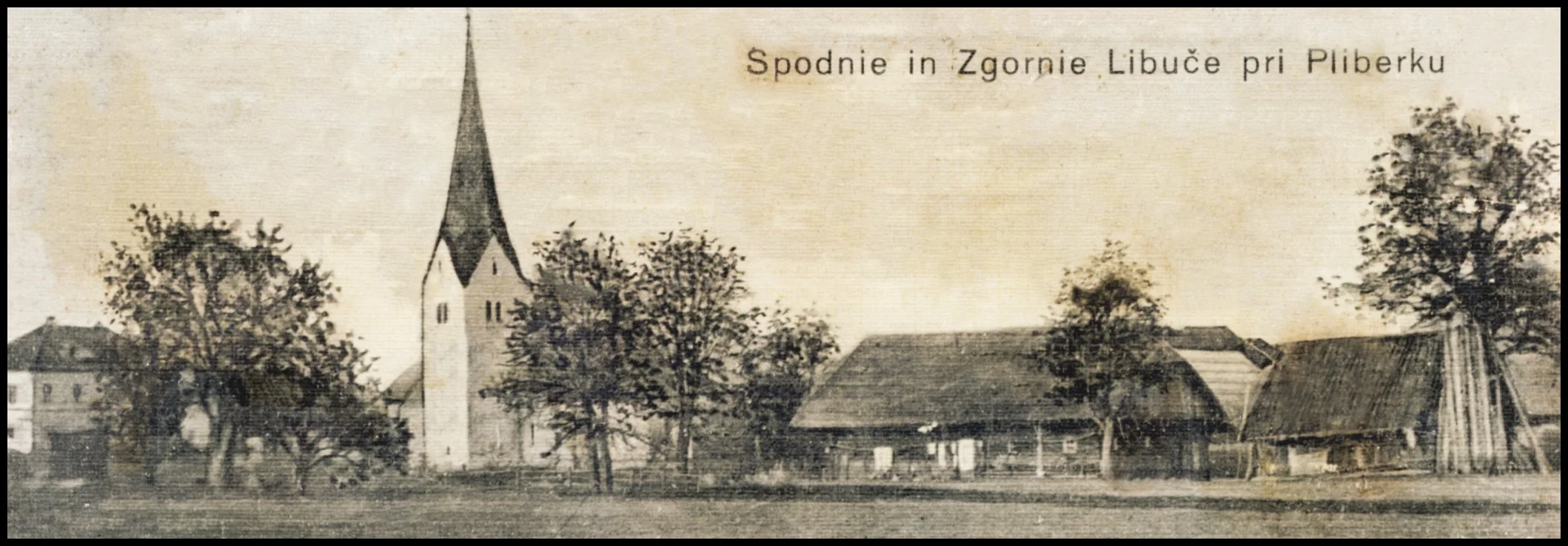
Detail from an old postcard (published by A. Mader, Bleiburg, c. 1910; postmarked 1918) showing Oberloibach, with the school visible in the background. The old farmhouse on the right is the farmstead known locally as vlg. Wolina (today Jelen).
The departure of numerous pupils from the traditional Loibach school district eventually resulted in Oberloibach Primary School reverting to a single-class school in the 1901/02 school year due to insufficient pupil numbers.
From the 1907/08 school year onwards, rising enrolment made it possible to operate the school once again with two classes. At the same time, teaching was increasingly offered bilingually in German and Slovenian.
On 16 May 1903, Motschilnik, chairman of the Local School Council, commissioned the painter Cappelari to place the Slovenian inscription “Ljudska šola” (“People’s School” or “Primary School”) on the school building. This caused considerable unrest among parts of the local population and ultimately led to new elections. Jakob Glawar was elected to the municipal council, while his son Gregor Glawar became a member of the Local School Council.
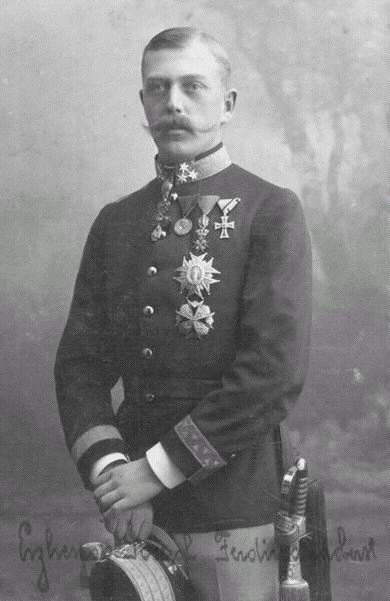
Lt. Col. Archduke Joseph Ferdinand of Austria / Habsburg-Tuscany
On 26 August 1903, Imperial-Royal divisional manoeuvres began in Loibach. They involved the 28th Infantry Troop Division “Laibach”, part of the III Corps, under the command of Field Marshal-Lieutenant Rudolf Edler von Chavanne. The entire area from St. Georgen to the railway embankment in Unterloibach was filled with soldiers. Viktor Kovačič of Infantry Regiment No. 97 repeatedly entered the school building to deliver messages from his regimental command.
On 30 August 1903, Oberloibach Primary School received a distinguished visitor. At precisely noon, Archduke Leopold Salvator of Austria-Tuscany and his staff stood in the school garden to observe the conclusion of the manoeuvres. This was followed by a parade involving more than 7,000 soldiers. Infantry Regiment No. 47 “Graf Beck” marched past the guests of honour to the sound of its regimental march, composed by Josef Wagner.
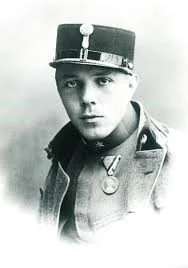
On 19 November 1918, Loibach was occupied by troops of the Landsturm Regiment from Laibach. The commanding officers took up quarters in the primary school. A public notice in Serbian proclaimed the area’s incorporation into the newly established State of Slovenes, Croats and Serbs (SHS State).
On 23 November 1918, Franjo Malgaj occupied the town of Bleiburg “in the name of the Entente”, as he himself claimed. The subsequent Carinthian plebiscite of 10 October 1920 resulted in a majority of 59.41 percent voting to remain part of Austria. The SHS occupation forces finally left the country on 22 November 1920.
1921–1945
On 4 December 1929, rural continuation courses for young people between the ages of 14 and 17 were introduced at Loibach Primary School. These courses continued until 1959.
In the 1934/35 school year, pre-military youth training, including marching and drill exercises, was introduced at Loibach Primary School. The programme was initially conducted by Gendarmerie Inspector Painsit of the Loibach gendarmerie post. In the 1936/37 school year, Gendarmerie Inspector Sametz of Loibach took over this responsibility.
Following the entry of German troops into Austria and the so-called “Anschluss” in March 1938, National Socialist flags were also raised in Loibach. A large celebration took place in Unterloibach with the participation of local schoolchildren.
On 4 April 1938, according to the school chronicle, “everyone” travelled to Klagenfurt to see the “Führer”. In the plebiscite of 10 April 1938, according to the official figures published at the time, 99.75 percent of voters in the municipality of Loibach – with only one vote against – supported the annexation of Austria to the German Reich.
Whenever the SS police occupied part of the school building, the second class had to be dismissed. During these periods, the first class was taught at the Hartmann property in Unterloibach and later also at the Trampusch property.
During the Second World War, units of the SS police were quartered in Oberloibach Primary School on several occasions. The potato cellar of the school building was converted into an air-raid shelter.
On 4 April 1945, one of the classrooms was occupied by the military. On 6 May 1945, all units quartered there finally left the school building. On 7 May 1945, one day before the unconditional surrender of the German armed forces, all symbols of “Nazi rule” in the school were burned.
On 18 May 1945, British soldiers took up quarters in the school building. According to the school chronicle, their arrival restored calm to the village after the turbulent final days of the war. The chronicle reports that in the preceding days there had been repeated attacks by Partisans as well as attempted abductions of members of the civilian population. The British occupation forces later established their own post at the customs house.
1946–2016
After 1945, teaching at Loibach Primary School was conducted bilingually in German and Slovenian. In 1958, parents were given the option of withdrawing their children from instruction in Slovenian. As a result, 81 percent of the children were withdrawn from bilingual education.
In 1955, extensive renovation and reconstruction work at Oberloibach Primary School was completed. At the same time, the new teachers’ residence was officially inaugurated. Further major renovations to the school building followed in 1967.
Milka Hartman (1902–1997), poet, composer, educator, and one of the most important cultural figures of the Carinthian Slovenes, remained closely connected to Loibach throughout her life. She was born in Unterloibach and attended the primary school in Oberloibach.
Through her educational, cultural, and artistic work, she made an important contribution to the life of the Slovenian community in Carinthia. She organised educational and home-economics courses, promoted cultural activities, and dedicated herself to preserving the Slovenian language, songs, and cultural identity.
Loibach and her native Jauntal valley held a special place in her artistic work. In her poetry, she captured the landscape of her homeland, its people, their language, traditions, and everyday life. Because of her deep connection to her home region, she also became known as the “Poet of the Loibach Fields.”
The memory of Milka Hartman remains very much alive in Loibach today. The square in front of the former primary school bears her name – Milka Hartman Square. In this way, the building creates a unique connection between its past as a place of education and its present as a home for art and culture.
Following a comprehensive renovation of the building at a cost of 3,246,000 Austrian schillings, Loibach Primary School was ceremonially reopened on 21 October 1990.
Following the reorganisation of the Loibach school district in 2003, discussions increasingly turned to the future of the small village school and the possibility of its closure. By the 2010/11 school year, only 15 pupils were registered. As a result, the school continued to operate only as a branch of Bleiburg Primary School.
At the end of the 2012/13 school year, Loibach Primary School finally closed its doors due to insufficient pupil numbers. After almost 140 years, this marked not only the end of the building’s history as a school and educational institution. The local associations and the village community also lost an important centre of social and cultural life.
2017–Present
In December 2017, the Kovačič family acquired the former school building. Following extensive renovation and the development of a new concept for its use, the building was transformed into a place dedicated to art, culture and human encounter.
On 1 June 2019, the Atelier der Kunst Kovačič officially opened its doors.
A new chapter in the history of the old schoolhouse had begun: a place once dedicated to learning became a place for art, cultural exchange, creativity and shared artistic endeavour.